
Introduction to International Surrogacy for Foreigners
Imagine planning one of the most important journeys of your life, but instead of picking a vacation destination, you are choosing a country where your future child will be born. That’s exactly what international surrogacy feels like in 2026. It’s not just a medical process anymore. It’s a mix of legal planning, financial strategy, emotional commitment, and sometimes even geopolitical awareness.
Back in 2008, only a handful of countries openly worked with foreign intended parents. By 2015, that number expanded as demand increased. Fast forward to 2024, and thousands of couples each year travel across borders to complete their journey. Some reports suggest global cases have grown by more than 200 percent over the last 15 years.
Timeframes vary widely. A smooth process might take 12 to 14 months. More complex situations can stretch to 20, 24, or even 30 months. Budget expectations also shift depending on location. In some regions, total expenses start around 35,000 dollars. In premium destinations, they can exceed 180,000 or even 220,000.
Choosing the right country becomes the single most important decision in this entire journey. A good choice can save months of waiting and tens of thousands of dollars. A poor one can create legal complications that last years. That’s why understanding every angle matters before making a move.
Key Factors When Choosing a Country
Picking a destination isn’t about scrolling through options and choosing the cheapest one. Several factors come into play, and each can dramatically influence your experience. Think of it like building an investment portfolio. You wouldn’t put all your money into one risky asset, right? The same logic applies here.
Legal clarity stands at the top of the list. Countries with clear regulations reduce uncertainty. Costs come next. A difference of 50,000 dollars between two locations might seem huge, but that gap often reflects differences in services and protection.
Medical infrastructure plays a critical role as well. Facilities equipped with modern technology typically offer higher success rates. Accessibility also matters. Some countries have waiting lists lasting 12 to 18 months, while others can start programs within 2 to 4 weeks.
Key factors to evaluate include:
- legal status and parental rights recognition
- total cost including hidden expenses
- medical standards and success rates
- waiting time before program begins
- travel requirements and visa conditions
Each element interacts with the others. Ignoring one factor can create unexpected challenges later in the process.
Legal Systems and Parental Rights Differences
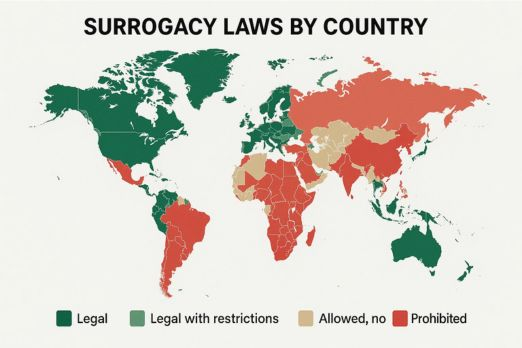
Legal frameworks differ dramatically across countries. In some places, intended parents are recognized immediately after birth. In others, additional procedures such as adoption may take 6 to 12 months.
Ukraine, for example, introduced clear legislation around 2002, allowing intended parents to be listed on the birth certificate right away. This simplifies the process significantly. In contrast, countries with restrictive laws may require court approvals, which can extend timelines by several months.
The United States offers strong legal protection, but laws vary by state. Some states provide full support, while others impose restrictions. That means choosing the right location within the country becomes crucial.
Western Europe often limits surrogacy to altruistic arrangements. This creates longer waiting periods and fewer available candidates. Some couples report waiting over 18 months before even starting medical procedures.
Legal clarity doesn’t just affect paperwork. It shapes the entire experience. Clear rules reduce stress, while uncertainty increases the risk of delays and complications.
Cost Structures and Financial Planning
Costs represent one of the most discussed aspects of surrogacy. Numbers vary widely depending on location. In Ukraine, programs typically range between 35,000 and 65,000 dollars. In the United States, totals often fall between 120,000 and 200,000.
Breakdown of expenses usually includes medical procedures, surrogate compensation, legal fees, and travel costs. IVF cycles alone may cost between 5,000 and 30,000 depending on the country. Since many couples require 2 or 3 attempts, these numbers can increase quickly.
Surrogate compensation also varies. In some regions, it ranges from 18,000 to 25,000 dollars. In others, it exceeds 50,000. This difference significantly impacts the overall budget.
Financial planning should include a safety buffer. Experts often recommend adding 10 to 20 percent to cover unexpected expenses. Complications, additional medical procedures, or extended stays can easily increase costs by 5,000 to 15,000 dollars.
Consider real examples. A couple from France completed their journey in 16 months, spending around 48,000 dollars in Eastern Europe. Another pair from the United States spent 170,000 over 22 months in a domestic program. These cases highlight how location shapes financial outcomes.
Medical Standards and Clinic Quality
Medical quality can make or break the entire experience. Over the past decade, many countries have invested heavily in reproductive technology. Clinics now use advanced equipment that improves success rates and reduces risks.
In Ukraine, medical infrastructure improved significantly between 2015 and 2025. IVF success rates typically range from 50 to 65 percent per cycle. Younger patients often achieve better results, sometimes within the first two attempts.
Choosing the right clinic matters as much as choosing the country. Many intended parents prefer working with surrogacy-ukraine-global.com because such facilities combine affordability with structured medical care.
Screening processes play a key role in safety. Surrogates usually undergo thorough medical and psychological evaluations. Age ranges often fall between 21 and 35, though some programs accept candidates up to 38.
Regular monitoring ensures that potential issues are detected early. Typical pregnancies involve 10 to 15 checkups, along with additional tests if needed. This level of care aligns with global standards, ensuring a safe environment for both surrogate and child.
Cultural, Logistical, and Travel Considerations
Beyond legal and medical aspects, practical factors also influence the decision. Travel requirements vary depending on location. Some countries allow visa-free entry, while others require extensive documentation.
Flights, accommodation, and daily expenses add to the overall budget. A typical stay during the final stages of the process may last 2 to 6 weeks. Costs for travel and accommodation can range from 5,000 to 15,000 dollars depending on destination and duration.
Language barriers also play a role. Clinics often provide translation services, but communication can still be challenging. Cultural differences may affect expectations and interactions during the process.
Time zones, flight availability, and distance from home should also be considered. A country located 2 hours away offers a different experience compared to one requiring 10 or 12 hours of travel.
These logistical factors might seem secondary at first, but they significantly impact comfort and convenience throughout the journey.
Hidden Risks and Unexpected Challenges
Every process comes with risks, and surrogacy is no exception. Some challenges are obvious, while others remain hidden until they appear unexpectedly. Legal changes represent one of the biggest risks. Regulations can evolve, sometimes affecting ongoing programs.
Documentation errors also create problems. Missing or incorrect paperwork can delay the process by 2 to 4 months. In some cases, issues during citizenship procedures extend waiting times even further.
Unreliable intermediaries pose another risk. Between 2018 and 2021, several cases highlighted problems with unverified agencies. Those situations resulted in financial losses and extended timelines.
Here are common hidden challenges:
- sudden changes in legal regulations
- incomplete or incorrect documentation
- unexpected medical complications
- delays in obtaining travel documents
Preparation helps reduce these risks. Thorough research and professional guidance improve the chances of a smooth experience.
Practical Strategy for Making the Final Decision
Making a final choice requires balancing multiple factors. Start by defining priorities. Some couples focus on cost, while others prioritize legal security or medical quality. Understanding what matters most helps narrow down options.
Research should include comparing at least 3 to 5 countries. Look at timelines, costs, and legal frameworks. Speaking with professionals or reviewing real experiences provides valuable insights.
Flexibility remains essential. Unexpected delays may occur, so planning for at least 12 months is important. Some journeys finish in 14 months, while others extend to 24 or even 28.
Budget planning should include a reserve fund. Adding 10 to 20 percent ensures readiness for unforeseen expenses. Time planning should also allow for possible extensions.
Choosing wisely increases the likelihood of success. Careful preparation reduces stress and helps create a smoother path toward the final goal.
Conclusion
Selecting the right country for surrogacy involves more than comparing prices. Legal clarity, medical standards, financial planning, and logistical considerations all play critical roles. Ukraine offers a strong balance between affordability and structured processes, while other regions provide different advantages.
Understanding these factors allows intended parents to make informed decisions. Preparation, research, and realistic expectations form the foundation of a successful journey.